Cleaning for Coastal Climate Tip - CarInteriorMix
Cleaning for Coastal Climate Tip
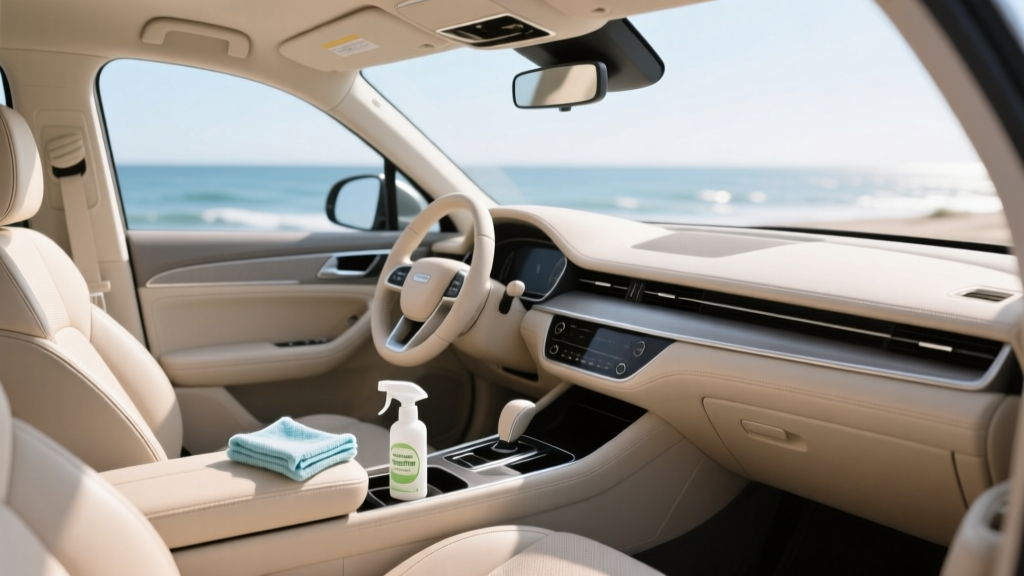
If you live near the ocean (or even a big salty bay), your car?s interior takes a different kind of beating. Salt air, humidity, sandy shoes, and wet swimsuits don?t just make things look messy?they can speed up musty odors, window fogging, fabric staining, and even corrosion on seat rails and interior hardware.
The good news: you don?t need a full weekend detail to stay ahead of coastal grime. A few targeted habits and the right products (or simple DIY alternatives) keep your car interior fresh, protect materials like leather and vinyl, and reduce that ?beach funk? that seems to return overnight.
-
Vacuum sand the smart way (before it becomes sandpaper)
Sand works like grit sandpaper on carpet fibers and seat fabric?every time you slide your feet, it grinds in deeper. Use a shop vac or strong handheld vacuum with a crevice tool, and vacuum slowly in multiple directions to pull sand out of the pile. For stubborn sand in carpet, lightly agitate with a stiff nylon interior brush first, then vacuum again.
Real-world tip: After a beach day, vacuum the driver footwell and behind the pedals the same day?sand there can end up in seat tracks and wear them faster.
-
Do a quick ?salt wipe? on hard surfaces weekly
Coastal air leaves a thin salt film on dashboards, door panels, and trim, especially if you drive with windows cracked. Once a week, wipe hard surfaces with a damp microfiber cloth (water is often enough) and follow with a dry towel so moisture doesn?t sit in seams. If you want a product, an interior cleaner like Meguiar?s Quik Interior Detailer or Chemical Guys InnerClean works well for quick maintenance.
Safety note: Don?t use glossy dressings on the steering wheel, pedals, or shifter?slippery controls are a real hazard.
-
Neutralize ?beach moisture? with a dedicated odor routine
Humidity plus organic stuff (skin oils, spilled drinks, wet towels) creates that stubborn coastal smell. Keep a small bag of activated charcoal (or a refillable charcoal deodorizer) under a seat, and swap or recharge it monthly. If odors are already baked in, treat fabric and carpet with an enzyme-based odor eliminator (like Bio-Kleen Bac-Out or Nature?s Miracle) and let it fully dry with windows cracked.
Example: If your trunk smells like seawater after hauling wet gear, spray enzyme cleaner into the trunk carpet, scrub lightly, and leave the trunk open in shade for 30?60 minutes to dry.
-
Protect leather and vinyl from salty air with a light conditioner schedule
Salt and sun dry out leather and vinyl faster, leading to stiffness and cracking?especially on bolsters and headrests. Use a dedicated leather cleaner first (don?t just smear conditioner over dirt), then apply a water-based conditioner every 6?8 weeks. Good options include Lexol Leather Cleaner + Conditioner, or a DIY approach of mild soap and water for cleaning (test first), followed by a proper conditioner.
Pro tip: Avoid oily ?shiny? products on leather seats; they attract sand and can make you slide around.
-
Stop foggy windows and film with an alcohol-based glass wipe
Coastal humidity makes glass fog up fast, and interior film (from plastics and cleaners) makes it worse. Clean the inside of windows with an automotive glass cleaner (Stoner Invisible Glass is a classic) or a simple 1:1 mix of distilled water and isopropyl alcohol in a spray bottle. Wipe with a dedicated glass microfiber towel and finish with a dry buff so you don?t leave streaks.
Scenario: If your windshield fogs every morning near the beach, cleaning the inside glass plus running A/C for a few minutes (even in winter) helps pull moisture out of the cabin air.
-
Use rubber floor mats and rinse them like beach gear
Carpet mats hold salt, sand, and moisture?exactly what you don?t want in a humid coastal climate. Swap to all-weather rubber mats (WeatherTech, Husky, or OEM) and rinse them weekly with fresh water; salt residue is what keeps the grime sticky. Let mats dry fully before reinstalling to avoid creating a damp, mold-friendly layer under your feet.
Shortcut: Keep a small collapsible brush and a microfiber in the trunk so you can brush off sand before it gets ground in.
-
Clean and protect seat rails and metal hardware (yes, inside the cabin)
People think rust is only an exterior problem, but coastal air plus wet shoes can corrode seat rails and bolts. Slide seats all the way forward and back, vacuum along the rails, then wipe with a lightly damp microfiber. If you see surface corrosion starting, a small amount of rust-inhibiting spray on a cloth (not sprayed directly) can help?just keep it away from fabric and avoid overspray.
Safety note: Don?t soak seat mechanisms or seatbelt anchors with cleaners?excess liquid can interfere with movement and attract dirt.
-
Handle wet swimsuits and towels with a ?contained mess? rule
The fastest way to get mildew is tossing wet items onto seats or carpet. Keep a waterproof tote, a plastic storage bin, or even a heavy-duty trash bag in the trunk for wet gear, and empty it as soon as you get home. If a seat does get wet, blot (don?t rub) with towels, then aim a fan into the cabin or run the A/C on recirculate to dry things out faster.
Example: A $10 plastic bin saves you from that sour smell that comes back every humid morning for weeks.
-
Detail door jambs and weatherstripping to keep salt from creeping in
Salt and grime build up in door jambs and around rubber seals, then get dragged into the cabin every time you open the door. Wipe jambs monthly with a damp microfiber and a mild all-purpose cleaner (diluted). For weatherstripping, clean gently, then apply a rubber protectant (like 303 Aerospace Protectant) to help prevent drying, sticking, and cracking in salty air.
Pro tip: Don?t use petroleum-based products on rubber seals?they can swell and degrade the material over time.
-
Keep a ?coastal cleanup kit? in the car for 5-minute resets
Consistency beats marathon cleaning?especially in a beach climate. Stock a small kit: microfiber towels, travel-size interior cleaner, a mini vacuum or brush, glass wipes, and a small trash bag. When you?re waiting for a pickup or parked after a beach run, use those five minutes to remove sand and wipe touchpoints like the steering wheel, screen surround, and door pulls.
Product idea: A compact cordless vacuum (like a small Black+Decker-style handheld) plus a stiff interior brush can handle 80% of daily coastal mess.
Quick Reference Summary
- Vacuum sand slowly with a crevice tool; brush first for stubborn grit.
- Weekly damp microfiber wipe to remove salt film; avoid slippery dressings on controls.
- Use activated charcoal for ongoing odor control; enzyme cleaner for set-in smells.
- Clean then condition leather/vinyl every 6?8 weeks to fight salty air dryness.
- Clean inside glass with a proper cleaner or alcohol/distilled water mix to reduce fog and film.
- Switch to rubber floor mats and rinse with fresh water; dry fully before reinstalling.
- Vacuum/wipe seat rails and hardware to prevent interior corrosion; don?t drench mechanisms.
- Contain wet gear in a waterproof bin; dry wet seats fast with A/C or airflow.
- Wipe door jambs and protect weatherstripping with a rubber-safe protectant.
- Keep a small kit in the car for fast, frequent coastal cleanups.
Wrap-Up
Coastal living is great?your car interior just needs a slightly different playbook. Pick two or three tips from this list and make them routine (rubber mats, a weekly salt wipe, and a wet-gear bin are game-changers). Stick with it for a couple of weeks, and you?ll notice less sand, fewer smells, clearer windows, and an interior that looks like you don?t live five minutes from the beach.